
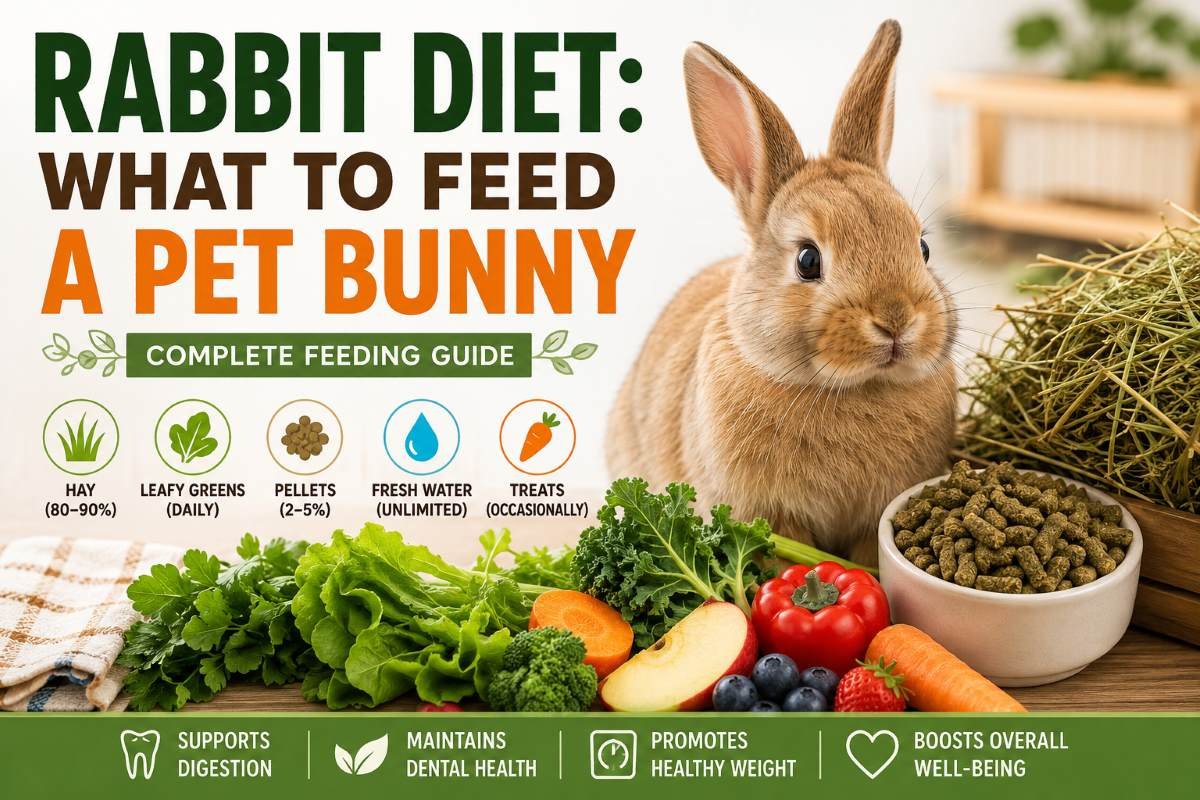
A healthy rabbit diet consists of unlimited grass hay, fresh leafy greens, a measured amount of high-fiber rabbit pellets, unlimited fresh water, and occasional healthy treats. Hay should make up around 80–90% of a pet rabbit’s diet because it supports healthy digestion, maintains proper tooth wear, and helps prevent digestive problems like GI s
Introduction to a Healthy Rabbit Diet
If you’re welcoming a rabbit into your home or want to improve your bunny’s nutrition, you’re probably asking one important question: What should a rabbit eat every day?
The answer is simpler than many new rabbit owners expect, yet it’s also one of the most misunderstood aspects of rabbit care. Contrary to popular cartoons, carrots aren’t the main food rabbits should eat. In fact, feeding too many carrots or pellets while neglecting hay can lead to obesity, digestive issues, and even serious health conditions.
A healthy rabbit diet is based on foods that closely resemble what wild rabbits naturally consume. Rabbits are herbivores with a highly specialized digestive system that depends on a constant supply of fiber. That’s why fresh grass hay—not pellets or treats—forms the foundation of proper rabbit nutrition.
In this guide, you’ll learn:
- What rabbits should eat every day
- The five essential parts of a balanced rabbit diet
- Safe vegetables and fruits
- Foods that are toxic to rabbits
- Feeding recommendations by age
- Common feeding mistakes to avoid
By the end, you’ll have a complete rabbit feeding guide to help your bunny stay healthy, active, and happy for years to come.
Understanding a Rabbit’s Natural Diet
To understand what pet rabbits should eat, it’s helpful to look at how their wild relatives feed.
Wild rabbits spend several hours every day grazing on grasses, weeds, herbs, leaves, and other fibrous plants. They rarely consume foods high in sugar or starch. Instead, they rely on a steady intake of coarse plant material to keep their digestive system functioning properly.
Unlike many mammals, rabbits are hindgut fermenters. Their digestive system is specially adapted to extract nutrients from fiber through fermentation in the cecum, a pouch located between the small and large intestines.
This unique digestive process explains why rabbits need constant access to hay.
Why Rabbits Need So Much Fiber
Fiber does far more than keep rabbits full. It plays several essential roles:
- Keeps food moving through the digestive tract
- Supports beneficial gut bacteria
- Prevents digestive slowdowns
- Reduces the risk of GI stasis
- Helps wear down continuously growing teeth
- Encourages natural chewing behavior
Without enough fiber, a rabbit’s digestive system can slow dramatically, potentially leading to gastrointestinal stasis (GI stasis), a life-threatening condition that requires immediate veterinary attention.
Did You Know?
A rabbit’s teeth never stop growing. Chewing fibrous hay throughout the day naturally wears them down and helps prevent painful dental problems.
The Importance of Cecotropes
One unique aspect of rabbit digestion is the production of cecotropes.
Cecotropes are soft, nutrient-rich droppings that rabbits consume directly from their bodies. While this may seem unusual, it’s a completely normal and healthy process.
Cecotropes contain:
- B vitamins
- Vitamin K
- Beneficial bacteria
- Amino acids
- Additional nutrients produced during fermentation
Re-eating these droppings allows rabbits to absorb nutrients that weren’t fully digested the first time.
If your rabbit regularly leaves cecotropes uneaten, it may indicate an unbalanced diet, obesity, or another underlying health issue.
What Can Rabbits Eat Daily?
A healthy daily rabbit diet should include five key components.
| Food | Frequency | Importance |
| Grass hay | Unlimited | Essential |
| Fresh leafy greens | Daily | Essential |
| High-fiber pellets | Measured | Moderate |
| Fresh water | Unlimited | Essential |
| Healthy treats | Occasionally | Limited |
The goal is to provide a diet that closely mimics natural grazing habits while supplying all the nutrients a domestic rabbit needs.
Daily Rabbit Diet Checklist
Every day, your rabbit should have access to:
- ✅ Unlimited grass hay
- ✅ Fresh clean water
- ✅ A variety of leafy greens
- ✅ Measured rabbit pellets
- ✅ Plenty of opportunities to chew and forage
Treats such as fruit should remain an occasional addition rather than a daily habit.
This is also on our list: Can Rabbits Eat Basil? Is This Herb Safe for Your Bunny?
The Five Essential Parts of a Healthy Rabbit Diet
A balanced rabbit diet isn’t about offering a large variety of foods; it’s about offering the right foods in the correct proportions.
Think of a rabbit’s diet as a pyramid.
| Food Group | Approximate Portion |
| Grass Hay | 80–90% |
| Fresh Greens | 8–15% |
| Pellets | 2–5% |
| Treats | Less than 2% |
| Water | Unlimited |
Each component plays a different role in supporting your rabbit’s health.
Let’s look at each one in detail.
Hay (80–90% of the Diet)
Hay is the single most important food in any healthy rabbit diet.
If you could choose only one food to offer your rabbit, hay would be the answer.
Unlike pellets or vegetables, hay provides the long fibers rabbits need for proper digestion, healthy teeth, and natural chewing behavior.
A rabbit should have access to fresh hay 24 hours a day.
Why Hay Is So Important
Hay supports nearly every aspect of rabbit health.
Digestive Health
The high fiber content keeps food moving through the digestive tract and supports healthy gut bacteria.
Dental Health
Rabbit teeth grow continuously throughout life.
Chewing tough, fibrous hay naturally wears teeth down, helping prevent overgrowth and painful dental disease.
Mental Enrichment
Rabbits naturally enjoy searching through hay, chewing different textures, and grazing throughout the day.
Providing unlimited hay encourages these instinctive behaviors and helps prevent boredom.
Best Types of Hay for Rabbits
Not all hay is created equal.
Here’s a comparison of the most common options.
| Hay Type | Best For | Fiber | Notes |
| Timothy Hay | Adult rabbits | High | Most recommended |
| Orchard Grass | Adults | High | Softer texture |
| Meadow Hay | Adults | High | Natural variety |
| Oat Hay | Adults | High | Crunchy seed heads |
| Alfalfa Hay | Young rabbits | High protein | Too rich for most adults |
For most healthy adult rabbits, Timothy hay remains the gold standard because of its excellent balance of fiber and nutrients.
How Much Hay Should a Rabbit Eat?
A common question is whether rabbits can eat too much hay.
The answer is simple:
No.
Healthy rabbits should have unlimited access to fresh grass hay at all times.
Instead of measuring hay by cups or handfuls, refill it whenever the supply begins to run low.
A rabbit should never completely run out of hay.
Signs of High-Quality Hay
Choose hay that is:
- Bright green
- Sweet-smelling
- Dust-free
- Free of mold
- Long and leafy
- Stored in a dry environment
Avoid hay that appears yellow, damp, musty, or excessively dusty.
Common Hay Feeding Mistakes
Many rabbit owners unintentionally make these mistakes:
- Feeding too much alfalfa to adult rabbits
- Using hay only as bedding
- Offering small portions instead of unlimited access
- Storing hay in airtight plastic bags where moisture can accumulate
- Replacing hay with pellets
Remember, pellets should supplement hay, not replace it.
Fresh Leafy Greens
After hay, fresh leafy greens are the next most important part of a rabbit feeding guide.
Leafy greens provide vitamins, minerals, antioxidants, and moisture while adding variety to your rabbit’s daily meals.
Instead of feeding the same vegetable every day, rotate several different greens throughout the week.
This helps provide a broader range of nutrients and reduces the risk of excessive intake of certain compounds, such as oxalates.
Best Leafy Greens for Rabbits
Many leafy vegetables are safe when introduced gradually.
Popular choices include:
- Romaine lettuce
- Green leaf lettuce
- Red leaf lettuce
- Cilantro
- Parsley
- Basil
- Dill
- Mint
- Bok choy
- Arugula
- Endive
- Dandelion greens
- Beet greens
Offering a mix of two or three greens each day creates a more balanced diet than relying on a single option.
Herbs Rabbits Can Enjoy
Fresh herbs are excellent additions to a rabbit’s diet because they provide both nutrition and enrichment.
Safe herbs include:
- Basil
- Mint
- Cilantro
- Dill
- Parsley
- Oregano
- Thyme
- Rosemary (in small amounts)
The strong aromas of herbs often encourage picky rabbits to eat more greens.
How Much Greens Should Rabbits Eat?
As a general guideline:
- Feed approximately 1–2 cups of leafy greens daily for every 2 kg (about 4.5 lb) of body weight.
- Divide greens into one or two meals.
- Wash vegetables thoroughly before serving.
- Remove uneaten greens after several hours to prevent spoilage.
Because every rabbit is different, monitor droppings and appetite whenever you introduce a new vegetable. A gradual introduction helps the digestive system adjust and reduces the chance of stomach upset.
Rabbit Pellets
Although hay should always be the main component of a healthy rabbit diet, high-quality rabbit pellets can provide additional vitamins, minerals, and nutrients. The key is moderation. Many health problems in pet rabbits are caused not by pellets themselves, but by feeding too many of them.
Adult rabbits that fill up on pellets often eat less hay, reducing the fiber their digestive system needs. Over time, this can contribute to obesity, dental disease, and digestive issues.
Do Rabbits Really Need Pellets?
The answer depends on your rabbit’s age and overall health.
- Baby rabbits benefit from more pellets because they’re still growing.
- Adult rabbits usually need only a small measured amount.
- Senior rabbits may require dietary adjustments based on weight and health, ideally under veterinary guidance.
Choosing the Best Rabbit Pellets
Look for pellets that are:
- High in fiber (18–25%)
- Timothy hay-based for adult rabbits
- Free from seeds, corn, nuts, or dried fruit
- Plain, uniform pellets rather than colorful mixes
Avoid muesli-style rabbit foods, as rabbits tend to selectively eat the tastier pieces and leave the nutritious ones behind.
| Rabbit Weight | Daily Pellet Amount |
| 2–4 lb | 1/8 cup |
| 5–7 lb | 1/4 cup |
| 8–10 lb | 1/3 cup |
| 10+ lb | Adjust based on body condition |
Tip: If your rabbit maintains a healthy weight while eating plenty of hay and greens, there’s rarely a need to increase pellet portions.
Fresh Water
Food often gets all the attention, but water is just as essential.
A rabbit should have unlimited access to clean, fresh water every day. Even mild dehydration can affect digestion and increase the risk of gastrointestinal problems.
Water Bowl vs. Water Bottle
Both options can work, but many rabbit owners prefer a heavy ceramic bowl because it allows rabbits to drink in a more natural position.
| Water Bowl | Water Bottle |
| Natural drinking posture | Cleaner in some environments |
| Easier to clean | Takes up less space |
| Encourages greater water intake | Less likely to be tipped over |
Many owners offer both, allowing the rabbit to choose.
Signs of Dehydration
Watch for:
- Dry mouth
- Reduced appetite
- Small, dry droppings
- Lethargy
- Thick or sticky saliva
Refreshing water at least once daily and more often in hot weather is a simple habit that supports your rabbit’s overall health.
Healthy Treats
Treats should be exactly that: treats.
Many rabbits love sweet foods, but too much sugar can upset the balance of beneficial bacteria in the gut. Fruit should make up only a tiny portion of a balanced rabbit diet.
Best Healthy Treats
Safe options include:
- Apple (without seeds)
- Banana
- Blueberries
- Strawberries
- Raspberries
- Pear
- Peach (without the pit)
Offer only one or two small bites once or twice a week.
Homemade Treat Ideas
Instead of processed treats, try:
- Small sprigs of fresh herbs
- A tiny slice of apple
- Dried flowers such as chamomile or calendula
- Willow sticks for chewing
Avoid yogurt drops, sugary snacks, chocolate, or commercial treats containing added sugar.
Safe Vegetables for Rabbits
Vegetables provide important nutrients, but not every vegetable is suitable for daily feeding.
Vegetables Rabbits Can Eat Daily
- Romaine lettuce
- Green leaf lettuce
- Cilantro
- Parsley
- Basil
- Dill
- Bok choy
- Endive
- Arugula
- Bell peppers
Vegetables to Feed Occasionally
Some vegetables are nutritious but should be offered in moderation.
- Kale
- Spinach
- Beet greens
- Carrot tops
- Celery
- Broccoli leaves
- Cabbage
These contain higher levels of calcium or compounds that may cause digestive upset in some rabbits if overfed.
Vegetable Feeding Tips
- Introduce one new vegetable at a time.
- Wash produce thoroughly.
- Rotate vegetables throughout the week.
- Remove leftovers before they spoil.
Safe Fruits for Rabbits
Fruit isn’t a dietary necessity, but it can be a useful training reward or occasional treat.
Best Fruits
- Apple
- Blueberries
- Strawberries
- Banana
- Raspberry
- Blackberry
- Pear
- Watermelon (without seeds)
Fruits to Limit
Because of their higher sugar content, offer only tiny amounts of:
- Grapes
- Mango
- Pineapple
- Cherries
Always remove pits, seeds, and large stems before feeding.
Foods Rabbits Should Never Eat
Some foods are unsuitable simply because they don’t provide the nutrition rabbits need. Others can be genuinely dangerous.
Never Feed
- Chocolate
- Avocado
- Onion
- Garlic
- Potato
- Rhubarb
- Bread
- Pasta
- Rice
- Dairy products
- Meat
- Processed snacks
- Candy
- Alcohol
- Caffeine
These foods may cause digestive upset, toxicity, or serious health complications.
Remember: If you’re unsure whether a food is safe, don’t guess. It’s always safer to check with a rabbit-savvy veterinarian before offering something new.
Unsafe Foods for Rabbits
Quick Reference Table
| Food | Safe? | Reason |
| Chocolate | ❌ | Toxic |
| Avocado | ❌ | Contains persin |
| Onion | ❌ | Can damage red blood cells |
| Garlic | ❌ | Digestive irritation |
| Potato | ❌ | High starch |
| Bread | ❌ | Poor digestion |
| Dairy | ❌ | Rabbits cannot digest properly |
| Iceberg Lettuce | ❌ | Very low nutrition and may cause digestive upset. |
Encourage Natural Foraging and Chewing Behaviors
Wild rabbits spend much of their day searching for food. Replicating this natural behavior helps keep pet rabbits mentally stimulated and physically active.
Easy enrichment ideas include:
- Stuff hay into cardboard tubes.
- Hide herbs inside paper bags.
- Scatter leafy greens around the enclosure.
- Use untreated willow sticks for chewing.
- Offer safe apple branches (untreated).
Foraging reduces boredom and encourages healthy movement.
Feeding Rabbits by Age
A rabbit’s nutritional needs change throughout its life.
Baby Rabbits
Baby rabbits require:
- Unlimited alfalfa hay
- Unlimited quality pellets
- Gradual introduction to leafy greens
- Constant fresh water
Growth requires extra protein and calcium.
Young Rabbits
Between about six and seven months of age:
- Transition gradually to Timothy hay.
- Reduce alfalfa.
- Introduce a wider variety of greens.
- Slowly reduce pellet intake.
Gradual dietary changes help prevent digestive upset.
Adult Rabbits
Adult rabbits thrive on:
- Unlimited grass hay
- Daily leafy greens
- Limited pellets
- Fresh water
- Occasional treats
Monitor body weight regularly and adjust pellet portions if needed.
Senior Rabbits
Older rabbits may need:
- Easier-to-chew hay
- Weight monitoring
- More frequent veterinary checkups
- Adjustments if dental disease develops
Some senior rabbits require more calories, while others need fewer, depending on their activity level.
Rabbit Feeding Schedule
Consistency helps maintain healthy digestion.
Sample Daily Schedule
| Time | Food |
| Morning | Fresh hay, greens, fresh water |
| Afternoon | Hay refill and enrichment |
| Evening | Measured pellets and more hay |
| Anytime | Unlimited fresh water |
Rather than offering one large meal, encourage grazing throughout the day.
How Much Should You Feed a Rabbit?
The exact amount depends on:
- Age
- Weight
- Breed
- Activity level
- Overall health
General Feeding Guide
- Unlimited hay
- 1–2 cups of leafy greens per 2 kg body weight
- Limited pellets
- Fruit once or twice weekly
Monitor your rabbit’s body condition rather than relying only on feeding charts.
Rabbit Food Chart
| Food | Frequency | Portion |
| Timothy hay | Unlimited | Always available |
| Leafy greens | Daily | 1–2 cups per 2 kg |
| Pellets | Daily | Limited amount |
| Herbs | Daily | Small handful |
| Fruit | 1–2 times weekly | Small bite-sized pieces |
| Water | Unlimited | Refresh daily |
Seasonal Diet Changes
Rabbits’ nutritional needs can vary slightly with the seasons.
Summer
- Provide extra water.
- Offer moisture-rich greens.
- Keep hay dry.
- Watch for dehydration.
Winter
- Continue unlimited hay.
- Protect stored hay from moisture.
- Monitor body weight if activity decreases.
Fresh grass from untreated areas can be a seasonal enrichment, but introduce it gradually.
Signs Your Rabbit Has a Healthy Diet
Healthy rabbits usually show:
- Bright eyes
- Smooth, shiny coat
- Firm, round droppings
- Normal cecotrope production
- Healthy weight
- Strong appetite
- Active behavior
- Consistent hay consumption
These signs suggest the diet is supporting both digestion and overall well-being.
Signs of a Poor Diet
Diet-related problems often appear gradually.
Watch for:
- Weight gain
- Weight loss
- Small droppings
- Soft stool
- Reduced appetite
- Overgrown teeth
- Dull coat
- Lethargy
A rabbit that stops eating should always be treated as a medical emergency.
Common Rabbit Feeding Mistakes
Many problems are preventable.
Avoid these common mistakes:
- Feeding too many pellets
- Not providing unlimited hay
- Giving fruit every day
- Feeding unsafe vegetables
- Making sudden diet changes
- Offering processed treats
- Ignoring water intake
- Using food as the only form of enrichment
Small improvements in daily feeding habits often have a significant impact on long-term health.
Final Thoughts
A healthy rabbit diet doesn’t have to be complicated. Focus on the basics: unlimited high-quality hay, a variety of fresh leafy greens, measured high-fiber pellets, unlimited fresh water, and only occasional treats. These simple habits support healthy digestion, proper tooth wear, and a long, active life.
Remember that every rabbit is unique. Monitor your bunny’s weight, appetite, droppings, and overall behavior, and introduce new foods gradually. If you ever notice a sudden loss of appetite, changes in droppings, or signs of discomfort, seek advice from a rabbit-savvy veterinarian promptly.
With a balanced diet and consistent care, your rabbit will have the best chance to thrive for many happy years.
Frequently Asked Questions
What is the healthiest diet for a rabbit?
A healthy rabbit diet consists of unlimited grass hay, fresh leafy greens, measured high-fiber pellets, unlimited fresh water, and occasional fruit treats.
Can rabbits survive without pellets?
Healthy adult rabbits can often do well with unlimited hay and fresh greens, though pellets can provide additional balanced nutrition. Consult a rabbit-savvy veterinarian before making major dietary changes.
How much hay should rabbits eat?
As much as they want. Hay should always be available and should make up about 80–90% of the diet.
Can rabbits eat carrots every day?
No. Carrots contain more natural sugar than many people realize and should be offered only occasionally.
What vegetables can rabbits eat daily?
Safe daily vegetables include romaine lettuce, green leaf lettuce, cilantro, basil, dill, parsley, bok choy, and arugula.
Can rabbits eat fruit every day?
No. Fruit should be limited to one or two small servings each week because of its sugar content.