
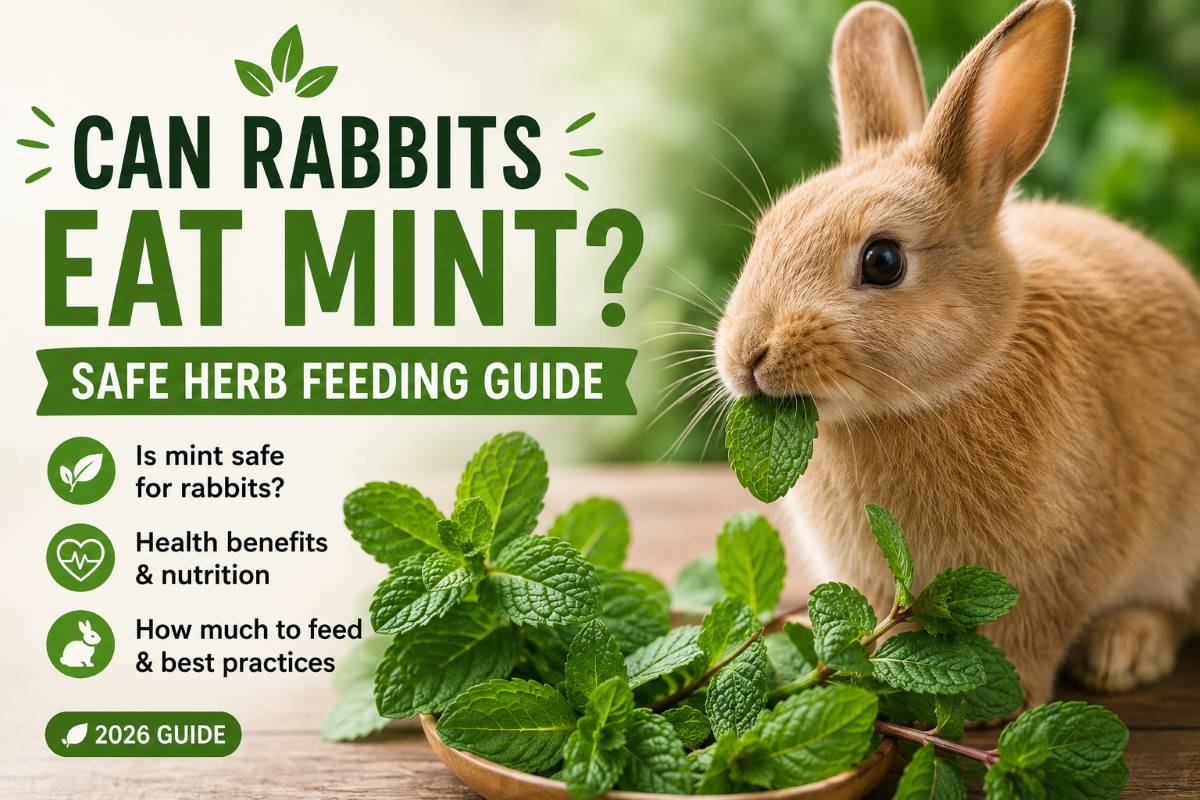
Yes, rabbits can eat fresh mint in moderation. Mint is a rabbit-safe herb that provides fiber, vitamins, antioxidants, and hydration. It should be offered as an occasional leafy treat alongside other fresh greens, while unlimited grass hay should remain the foundation of a healthy rabbit’s diet.
The simple answer is yes: healthy adult rabbits can safely enjoy fresh mint leaves as part of a balanced diet.
In this guide, you’ll learn whether mint is good for rabbits, how much they can safely eat, the nutritional benefits of mint, and feeding recommendations for baby and adult rabbits.
Also Read: Can Rabbits Eat Basil? Is This Herb Safe for Your Bunny?
Introduction
Mint belongs to the Lamiaceae (mint) family, a group of aromatic herbs that includes basil, rosemary, oregano, thyme, and lemon balm. Many of these herbs are perfectly safe for rabbits when fed in appropriate amounts.
That said, there’s an important distinction between safe and necessary.
Mint isn’t an essential part of a rabbit’s diet. Instead, think of it as a flavorful supplement that adds variety to the fresh leafy greens your rabbit already eats. The majority of a rabbit’s nutrition should always come from unlimited grass hay, which provides the long fiber needed to keep the digestive system functioning properly.
A healthy rabbit diet generally looks like this:
| Food | Recommended Amount |
| Grass hay | Unlimited |
| Fresh water | Unlimited |
| Leafy greens | Daily |
| Rabbit pellets | Limited quantity |
| Fresh herbs (including mint) | Small portions several times per week |
| Fruits | Occasional treats |
When fed correctly, mint can become a healthy addition to your rabbit’s weekly menu without replacing more important foods.
Do Rabbits Like Eating Mint?
Surprisingly, many rabbits absolutely love mint.
Just like people have favorite foods, rabbits have individual preferences.
Why Many Rabbits Enjoy Mint
Several characteristics make mint attractive:
- Pleasant aroma
- Soft leaves
- High moisture content
- Mild flavor
- Easy to chew
Many owners also notice that rabbits become more interested in eating salads when a few mint leaves are mixed in with other greens.
Why Some Rabbits Refuse Mint
Not every rabbit will like mint immediately.
Possible reasons include:
- They’re unfamiliar with the herb.
- They prefer sweeter leafy greens.
- They’re naturally cautious about new foods.
- They already have favorite herbs.
If your rabbit ignores mint, don’t panic. Avoid forcing it. Instead, offer a tiny amount again after a few days, mixed with familiar vegetables.
Sometimes rabbits simply need time to decide they enjoy something new.
Is Mint Safe for Rabbits?
One of the biggest concerns rabbit owners have is whether mint could be toxic.
Fortunately, fresh culinary mint is considered non-toxic for healthy rabbits.
Common edible varieties such as peppermint, spearmint, apple mint, and chocolate mint are generally safe when offered in moderation.
What makes mint a suitable rabbit food?
Why Mint Is Safe
Mint has several characteristics that make it compatible with a rabbit’s digestive system.
- Low sugar content
- Good fiber levels
- High moisture
- No toxic compounds found in culinary varieties
- Easy to digest for healthy adult rabbits
Unlike sugary fruits, mint won’t dramatically increase sugar intake.
Unlike processed treats, it contains no artificial ingredients.
Unlike iceberg lettuce, it offers useful nutrients without being mostly water and very little nutrition.
When Mint May Not Be Safe
Even healthy foods can become problematic if they’re fed incorrectly.
Avoid feeding mint if:
- It has been sprayed with pesticides.
- It shows signs of mold or spoilage.
- Your rabbit is recovering from digestive illness unless advised otherwise by a veterinarian.
- Your rabbit has never eaten leafy herbs before, and you introduce a large quantity at once.
Fresh, clean, pesticide-free mint is always the safest option.
What Are the Nutritional Benefits of Mint for Rabbits?
Although rabbits don’t require mint specifically, it contains several nutrients that contribute to overall health.
Nutritional Value of Fresh Mint
| Nutrient | Why It Matters for Rabbits |
| Fiber | Supports healthy digestion |
| Vitamin A | Helps maintain healthy eyes and skin |
| Vitamin K | Supports normal blood clotting and bone health |
| Calcium | Important for bones and teeth |
| Potassium | Supports muscles and nerves |
| Iron | Helps maintain healthy blood cells |
| Antioxidants | Protect cells from oxidative damage |
| Water | Helps maintain hydration |
The amounts aren’t high enough to make mint a nutritional powerhouse on its own, but together these nutrients make it a worthwhile addition to a varied diet.
Health Benefits of Mint for Rabbits
Mint offers more than just a refreshing smell.
When included in a balanced feeding routine, it may provide several practical benefits.
Supports Healthy Digestion
Healthy digestion is the foundation of rabbit health.
Fresh mint contributes dietary fiber and moisture that complement a hay-rich diet.
While mint won’t prevent digestive disorders by itself, it fits well within a feeding plan designed to support normal gut function.
Encourages Healthy Gut Bacteria
Inside every rabbit’s digestive tract lives a complex community of beneficial bacteria.
These microbes help break down fiber and produce nutrients that rabbits need.
Offering a variety of leafy greens, including herbs like mint, can support a more diverse diet without overwhelming the digestive system.
Provides Dietary Variety
Imagine eating the same salad every day.
Eventually, it would become boring.
Rabbits are no different.
Rotating herbs throughout the week helps provide different textures, flavors, and aromas that encourage natural grazing behavior.
A weekly herb rotation might include:
- Mint
- Basil
- Cilantro
- Dill
- Parsley
- Thyme
Helps Keep Rabbits Hydrated
Fresh herbs contain a significant amount of water.
Although rabbits should always have unlimited clean drinking water, moisture-rich greens can contribute to daily hydration, especially during warmer months.
Rich in Natural Antioxidants
Mint contains naturally occurring plant antioxidants that help protect cells from normal metabolic stress.
While antioxidants shouldn’t be the primary reason to feed mint, they’re another small advantage of including fresh herbs in your rabbit’s diet.
Can Baby Rabbits Eat Mint?
Baby rabbits have much more delicate digestive systems than adults.
For the first several weeks of life, their digestive tract is still developing, making sudden dietary changes risky.
When Can Baby Rabbits Eat Mint?
Most veterinarians recommend waiting until a young rabbit is at least 12 weeks old before introducing fresh leafy greens and herbs.
Before that age, their primary diet should consist of:
- Mother’s milk (if nursing)
- Unlimited grass hay
- Age-appropriate rabbit pellets
Fresh herbs, including mint, should come later.
How to Introduce Mint Safely
When your rabbit reaches the appropriate age:
- Offer one small mint leaf.
- Wait 24–48 hours.
- Watch for changes in droppings.
- Monitor appetite.
- Increase slowly only if no digestive problems appear.
Introducing several new vegetables at once makes it difficult to determine which food caused a problem if digestive upset occurs.
Warning Signs to Watch For
After introducing mint, observe your rabbit.
Contact a rabbit-savvy veterinarian if you notice:
- Diarrhea
- Very small droppings
- Refusing hay
- Loss of appetite
- Bloating
- Lethargy
These symptoms may not be caused by mint specifically, but they always deserve prompt attention in rabbits because digestive issues can become serious quickly.
How Much Mint Can a Rabbit Eat?
Mint should be viewed as one ingredient in a varied salad, not the main course.
As a general rule:
- Small rabbits: 1–2 fresh leaves
- Medium rabbits: 2–4 fresh leaves
- Large rabbits: A small handful mixed with other greens
Offering mint two or three times per week is usually plenty for most healthy adult rabbits.
The goal isn’t to maximize mint intake; it’s to provide safe dietary variety while keeping hay as the primary source of nutrition.
How to Introduce Mint to Your Rabbit’s Diet
Adding any new food to a rabbit’s menu should be done slowly, and mint is no exception. Rabbits have highly sensitive digestive systems that rely on a balanced population of beneficial bacteria. A sudden change, even with a healthy herb, can upset that balance.
The safest approach is to introduce only one new herb at a time.
Steps to Introduce Mint Safely
- Offer one or two fresh mint leaves.
- Wait 24–48 hours before offering more.
- Check that droppings remain normal in size and shape.
- Make sure your rabbit continues eating hay.
- Gradually increase the amount over several days if everything looks normal.
Tip: A healthy rabbit should always remain interested in hay. If your rabbit starts ignoring hay in favor of mint, reduce the herbs and encourage more hay consumption.
Signs the Introduction Is Going Well
- Normal appetite
- Regular, round droppings
- Active behavior
- Continued hay consumption
- No bloating or diarrhea
If you notice digestive upset, stop feeding mint temporarily and consult a rabbit-savvy veterinarian if symptoms persist.
How to Feed Mint to Rabbits
Feeding mint correctly is just as important as choosing the right amount. Fresh herbs can collect dirt, bacteria, and pesticide residue, so preparation matters.
Fortunately, serving mint is simple.
Best Way to Feed Mint
- Choose fresh, vibrant green leaves.
- Wash thoroughly under running water.
- Remove yellow, wilted, or damaged leaves.
- Serve raw, never cooked.
- Mix mint with other leafy greens instead of feeding large amounts alone.
- Remove uneaten herbs after a few hours to prevent spoilage.
A balanced rabbit salad might include:
- Romaine lettuce
- Green leaf lettuce
- Cilantro
- Basil
- Dill
- A few mint leaves
Offering a mixture of greens provides a wider range of nutrients while preventing rabbits from becoming overly attached to one particular herb.
Which Types of Mint Are Safe for Rabbits?
“Mint” isn’t just one plant. There are dozens of mint varieties, and while most common culinary mints are safe, not every plant in the mint family should end up in your rabbit’s bowl.
The good news? The varieties you’ll usually find in grocery stores or home gardens are generally rabbit-safe.
| Mint Variety | Safe for Rabbits? | Notes |
| Peppermint | ✅ Yes | Strong aroma; feed in moderation |
| Spearmint | ✅ Yes | Mild flavor; often preferred |
| Apple Mint | ✅ Yes | Soft leaves and gentle taste |
| Chocolate Mint | ✅ Yes | Contains no chocolate |
| Wild Mint | ✅ Usually | Only if correctly identified and pesticide-free |
| Pennyroyal | ❌ No | Toxic; never feed |
Let’s look at each variety more closely:
Peppermint
Peppermint is probably the most recognizable type of mint. It has a cool, refreshing scent thanks to its naturally occurring menthol compounds.
Benefits of Peppermint
- Pleasant aroma
- Rich in fiber
- Low in sugar
- Adds variety to leafy salads
Because peppermint has a stronger flavor than some other herbs, start with just a leaf or two.
Spearmint
If peppermint is bold, spearmint is its gentler cousin.
Its milder flavor makes it one of the easiest herbs to introduce, especially for rabbits that seem hesitant around stronger-smelling plants.
Why Spearmint Is Popular
- Mild taste
- Soft leaves
- Easy to grow at home
- High moisture content
Apple Mint
Apple mint has fuzzy leaves and a subtle fruity aroma. Despite its name, it doesn’t contain apples or added sugars.
This variety is safe for rabbits and offers the same basic nutritional benefits as other culinary mints.
Many gardeners prefer growing apple mint because it spreads quickly and produces plenty of tender leaves throughout the growing season.
Chocolate Mint
The name “chocolate mint” often worries rabbit owners.
Fortunately, there’s no actual chocolate in the plant.
Chocolate mint is simply a variety of mint with a subtle chocolate-like fragrance. Since chocolate itself is toxic to rabbits, it’s understandable why the name confuses.
The plant, however, is perfectly safe when fed in moderation.
Wild Mint
Wild mint can also be safe, but only if you know exactly what you’re harvesting.
That’s the tricky part.
Several plants resemble wild mint, and some may not be suitable for rabbits. Plants growing near roadsides, industrial areas, or places treated with herbicides may also contain harmful contaminants.
If you’re unsure about identification, it’s much safer to stick with homegrown or store-bought culinary mint.
Mint-Related Plants to Avoid
Not every member of the mint family belongs in your rabbit’s diet.
Avoid Feeding
- Pennyroyal
- Chemically treated ornamental mint
- Unknown wild plants
- Herbs sprayed with pesticides
- Moldy or decaying mint
Important: Even safe herbs become unsafe if they’ve been treated with pesticides, herbicides, or chemical fertilizers that aren’t intended for edible plants.
Can Rabbits Eat Different Parts of the Mint Plant?
Leaves
Yes, and in fact, mint leaves are the best part of the plant to feed.
Fresh mint leaves provide:
- Fiber
- Vitamins
- Water
- Antioxidants
- Natural aroma
Always choose bright green, healthy-looking leaves.
Avoid leaves that are:
- Yellow
- Brown
- Slimy
- Moldy
- Wilted
Whole Plant
Yes, rabbits can eat most parts of a healthy mint plant.
If you grow mint in your garden without chemicals, you can harvest leaves and tender stems directly for your rabbit.
Stems and Stalks
Yes, but only the young, tender stems.
Soft green stems contain fiber and are generally safe.
Older woody stalks, however, are tougher, harder to chew, and less appealing.
Safe Parts
✅ Tender green stems
✅ Young shoots
Avoid
❌ Thick woody stalks
❌ Dry, brittle stems
If you’re unsure, simply remove the tougher lower portion and feed the fresh upper growth.
Flowers
Many people forget that mint produces flowers.
The good news is they’re safe too.
Mint flowers are edible and contain similar nutrients to the leaves, although rabbits usually show less interest in them.
Offer flowers only occasionally as part of a varied mix of herbs.
As always:
- Fresh flowers only
- No pesticides
- No decorative florist flowers
Can Rabbits Eat Dried Mint?
Technically, yes, but fresh mint is the better choice.
| Fresh Mint | Dried Mint |
| High moisture | Very low moisture |
| Softer texture | Dry and brittle |
| More natural hydration | Little hydration |
| Preferred by most rabbits | Less appealing |
Can Rabbits Eat Cooked Mint?
No.
Rabbits should eat raw, fresh herbs.
Never feed:
- Mint sauce
- Cooked mint
- Mint jelly
- Mint-flavored human foods
Fresh is always best.
Can Rabbits Drink Mint Tea?
This question comes up surprisingly often.
The answer is no; there’s simply no benefit.
Although plain herbal mint tea isn’t necessarily poisonous, rabbits don’t need it.
Their healthiest drink has always been and remains fresh, clean water.
Avoid giving rabbits:
- Sweetened mint tea
- Flavored herbal teas
- Iced tea
- Bottled beverages
- Any drink containing caffeine or sugar
Unlimited fresh water should always be available.
Can Rabbits Eat Mint Every Day?
This is where moderation becomes especially important.
Even though mint is safe, feeding it every day isn’t recommended.
Rabbits benefit from eating a wide variety of leafy greens instead of relying on one herb repeatedly.
A simple weekly rotation could look like this:
| Day | Herb |
| Monday | Basil |
| Tuesday | Mint |
| Wednesday | Cilantro |
| Thursday | Dill |
| Friday | Parsley |
| Saturday | Thyme |
| Sunday | Mixed herbs |
Rotating herbs offers several advantages:
- Greater nutritional variety
- Reduced risk of overfeeding one plant
- More interesting meals
- Better mimicry of natural grazing behavior
Can Rabbits Eat Mint and Dill Together?
Yes.
Mint and dill are both rabbit-safe herbs that pair well together when fed in moderation.
Combining different herbs creates a more balanced and interesting salad than feeding large amounts of a single herb.
Other herbs that mix well with mint include:
- Basil
- Cilantro
- Parsley
- Thyme
- Oregano
- Lemon balm
The key is keeping portions moderate and ensuring herbs complement rather than replace your rabbit’s daily hay.
Can You Grow Mint at Home for Your Rabbits?
Absolutely, and it’s one of the easiest herbs to grow.
Growing your own mint gives you several advantages:
- No mystery pesticides
- Fresh leaves whenever you need them
- Lower cost than buying herbs regularly
- Better control over soil and fertilizers
Tips for Growing Rabbit-Safe Mint
- Use organic potting soil whenever possible.
- Avoid chemical pesticides and herbicides.
- Harvest young, tender leaves regularly.
- Rinse harvested mint before feeding.
- Store fresh sprigs in the refrigerator if not used immediately.
Homegrown mint can be an excellent addition to your rabbit’s diet as long as it’s offered in moderation and as part of a varied menu centered around unlimited grass hay.
When Should You Not Feed Mint to Rabbits?
Avoid Feeding Mint If Your Rabbit Is:
- Recovering from gastrointestinal (GI) stasis
- Experiencing diarrhea or soft stools
- Refusing food or hay
- Recovering after surgery
- Under veterinary treatment that requires a special diet
- Eating mint for the very first time during an illness
Remember: Whenever a rabbit stops eating for several hours, it’s considered a medical emergency. Don’t assume mint or any other food is the solution. Contact a rabbit-savvy veterinarian promptly.
What Are the Risks of Overfeeding Mint to Rabbits?
One or two mint leaves won’t hurt a healthy rabbit. However, feeding large amounts regularly can create nutritional imbalances and digestive problems.
Mint should always be viewed as a supplement to a hay-based diet, not a replacement.
Below are the most common risks associated with overfeeding mint.
Gastrointestinal Stasis
Gastrointestinal stasis (often shortened to GI stasis) is one of the most serious health problems rabbits can experience. It occurs when the digestive system slows down or stops moving food effectively.
Mint itself doesn’t cause GI stasis, but replacing hay with too many herbs, including mint, can reduce fiber intake, which increases the risk.
Symptoms of GI Stasis:
- Loss of appetite
- Few or no droppings
- Small, dry fecal pellets
- Lethargy
- Hunched posture
- Teeth grinding due to pain
How to Reduce the Risk:
- Provide unlimited grass hay every day.
- Feed herbs only in moderation.
- Encourage exercise.
- Ensure constant access to fresh water.
- Schedule regular veterinary checkups.
Diarrhea
Healthy rabbits rarely develop true diarrhea, but when they do, it’s a serious concern.
Suddenly introducing too much mint or several new greens at once may upset the balance of beneficial bacteria in the digestive tract.
Possible Causes:
- Feeding excessive herbs
- Introducing mint too quickly
- Poor-quality or spoiled greens
- Existing digestive illness
If your rabbit develops diarrhea, seek veterinary advice immediately. Rabbits can become dehydrated quickly.
Soft Uneaten Cecotropes
Many rabbit owners mistake cecotropes for diarrhea.
Cecotropes are soft, nutrient-rich droppings that rabbits normally eat directly from their anus to recover essential vitamins and nutrients. It’s a completely normal part of rabbit digestion.
However, when rabbits produce excessive soft cecotropes and leave them uneaten, something in the diet may need adjusting.
Possible reasons include:
- Too many rich herbs
- Excess pellets
- Too many sugary treats
- Obesity
- Reduced activity
Cutting back on rich foods and encouraging more hay consumption often helps restore balance.
Calcium Buildup
Mint contains calcium, but not enough to be considered dangerous on its own.
The problem arises when rabbits consume multiple calcium-rich foods in excessive amounts over time.
A balanced diet with varied greens helps prevent unnecessary calcium overload.
Foods that are generally higher in calcium include:
- Kale
- Spinach
- Parsley
- Beet greens
Rather than eliminating these foods, rotate them with lower-calcium options like romaine lettuce and mint.
Signs Your Rabbit Doesn’t Tolerate Mint
Watch for these warning signs after introducing mint:
- Loss of appetite
- Refusing hay
- Soft stools
- Diarrhea
- Small droppings
- Bloating
- Lethargy
- Hiding more than usual
If symptoms are mild, stop feeding mint and monitor your rabbit closely.
If symptoms are severe or your rabbit stops eating, contact a veterinarian immediately.
Best Herbs to Feed with Mint
Mint works best as part of a varied herb rotation rather than the only herb your rabbit receives.
Rabbit-Safe Herbs
| Herb | Safe? | Feeding Frequency |
| Basil | ✅ Yes | Several times weekly |
| Cilantro | ✅ Yes | Several times weekly |
| Dill | ✅ Yes | Moderate |
| Parsley | ✅ Yes | Moderate |
| Thyme | ✅ Yes | Occasionally |
| Oregano | ✅ Yes | Occasionally |
| Rosemary | ✅ Yes | Small amounts |
Rotating herbs helps provide:
- Different nutrients
- New flavors
- Natural foraging opportunities
- Reduced risk of overfeeding one plant
Foods That Pair Well with Mint
Mint combines nicely with many rabbit-safe vegetables and herbs.
Healthy Salad Combination
- Romaine lettuce
- Green leaf lettuce
- Endive
- Bok choy
- Cilantro
- Basil
- Dill
- Bell peppers (small amounts)
- A few fresh mint leaves
Creating mixed salads encourages rabbits to sample different textures and nutrients without overloading any one ingredient.
Foods to Avoid Feeding with Mint
Not everything belongs in a rabbit’s salad bowl.
Avoid combining mint with foods that are high in sugar, low in nutrition, or unsuitable for rabbits.
Foods to Avoid
- Iceberg lettuce
- Large amounts of spinach
- Excess kale
- Chocolate
- Candy
- Bread
- Crackers
- Dairy products
- Processed human foods
- Onions
- Garlic
A rabbit’s digestive system is designed for high-fiber plant material, not processed foods.
What Herbs Can Rabbits Eat Every Day?
Although herbs are healthy, it’s better to rotate them than feed the same one daily.
Safe Herbs to Rotate
- Basil
- Cilantro
- Mint
- Dill
- Thyme
- Oregano
- Lemon balm
Instead of feeding large quantities of one herb every day, mix several herbs throughout the week.
Variety helps create a more balanced diet and prevents boredom.
What Herbs Should Rabbits Not Eat?
Some herbs and ornamental plants are unsafe for rabbits.
Herbs to Avoid
| Herb | Reason |
| Pennyroyal | Toxic |
| Foxglove | Highly poisonous |
| Lily of the Valley | Toxic |
| Oleander | Extremely poisonous |
| Hemlock | Deadly |
| Monkshood | Toxic |
Always verify the identity of wild plants before feeding them to rabbits.
If you’re unsure, don’t feed it.
Common Myths About Rabbits and Mint
Rabbit nutrition is full of myths. Let’s clear up a few of the most common ones.
Myth 1: Mint Is Poisonous to Rabbits
False.
Fresh culinary mint varieties such as peppermint and spearmint are generally safe in moderation.
Myth 2: Rabbits Can Eat Unlimited Mint
False.
Too much mint may reduce hay consumption and upset digestive balance.
Myth 3: Dried Mint Is Better Than Fresh Mint
False.
Fresh mint contains more moisture and is usually more appealing to rabbits.
Myth 4: Mint Can Replace Hay
Absolutely not.
Hay should make up around 80–90% of a healthy rabbit’s diet.
No herb can replace the fiber hay provides.
Myth 5: All Mint Family Plants Are Safe
False.
Plants like pennyroyal should never be fed to rabbits.
Always confirm that you’re offering a safe culinary variety.
Conclusion
So, can rabbits eat mint? Yes, they certainly can. Fresh mint is a safe, aromatic herb that can add variety, flavor, and valuable nutrients to your rabbit’s diet when offered in moderation.
The most important thing to remember is that mint should complement your rabbit’s diet, not replace it. Unlimited grass hay, fresh water, and a balanced selection of leafy greens will always provide the strongest foundation for lifelong health.