
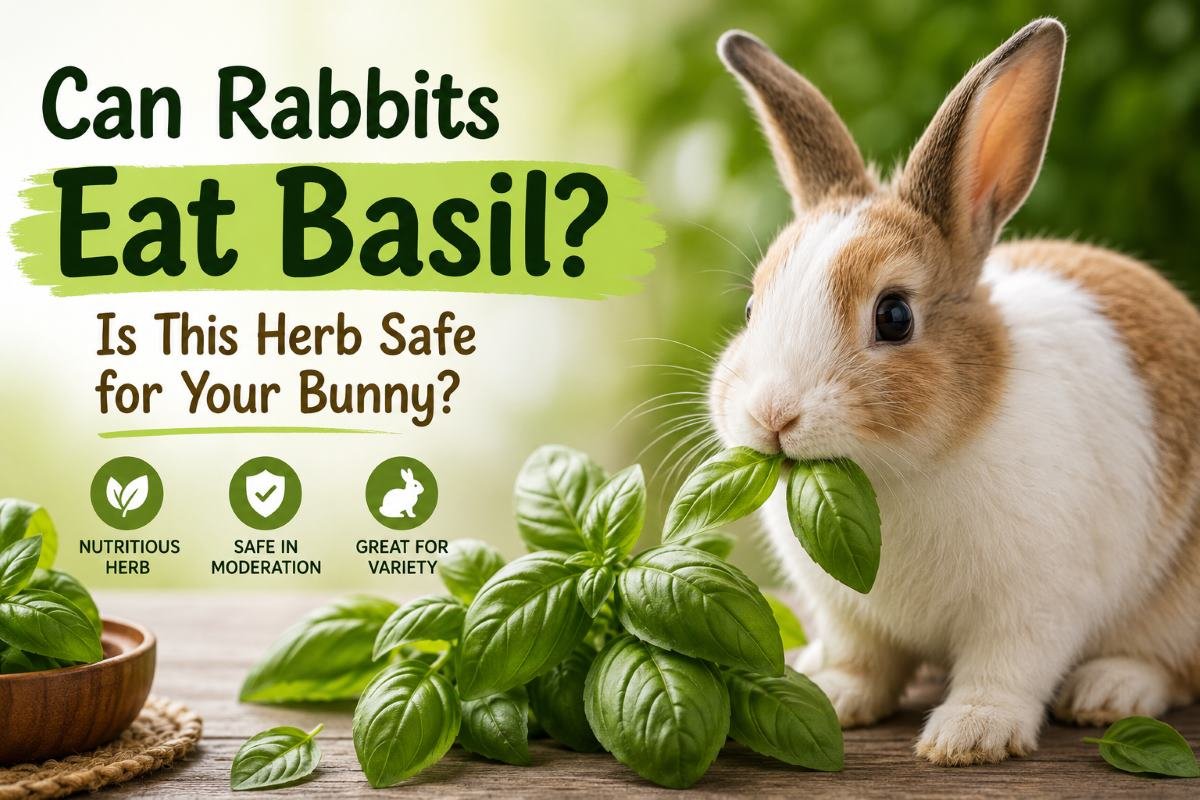
Yes, rabbits can eat basil. Basil belongs to the mint family (Lamiaceae) and is a safe, rabbit-friendly herb that can be offered in moderation as part of a balanced diet. It’s packed with beneficial vitamins, minerals, and antioxidants, but it should never replace high-quality hay, which should make up the majority of your rabbit’s daily food. Introduce basil gradually, feed only fresh, clean leaves and tender stems, and watch your rabbit for any digestive changes.
In this guide, you’ll learn everything you need to know about feeding basil to rabbits, including its nutritional value, health benefits, safe serving sizes, and different basil varieties.
Can Rabbits Eat Basil?
If someone asked me, “Can rabbits eat basil?” my answer would be simple: Absolutely, but don’t overdo it.
A balanced rabbit diet should consist of approximately:
| Food | Recommended Amount |
| High-quality hay | 80–90% of the diet |
| Fresh leafy greens and herbs | 10–15% |
| High-quality pellets | Small measured portion |
| Healthy treats (fruit) | Occasionally |
Is Basil Toxic to Rabbits?
Basil is not toxic to rabbits.
This culinary herb belongs to the mint family (Lamiaceae) and has long been used in kitchens around the world. Unlike plants such as onions, garlic, lilies, or avocado, which are unsafe for rabbits, fresh basil is generally considered a rabbit-safe herb when offered appropriately.
Too much basil may contribute to:
- Mild digestive upset
- Soft stools
- Reduced appetite for hay
- An unbalanced diet
- Excessive reliance on one type of leafy green
You May Also Like: The Best Rabbit Names: Unique, Cute & Catchy Bunny Names
Is Basil Safe for Rabbits?
Yes, basil is considered safe for healthy adult rabbits when it’s fresh, clean, and served in moderation.
Should You Feed Basil to Your Pet Rabbit?
That said, basil isn’t essential. If your rabbit dislikes it, there’s no reason to force the issue. Plenty of other rabbit-safe herbs such as cilantro, parsley, dill, thyme, or mint can provide similar variety.
Nutritional Value of Basil
Although rabbits only eat small amounts of basil at a time, every safe herb contributes something slightly different to their overall nutrient intake.
| Nutrient | Approximate Amount (per 100 g fresh basil) | Why It Matters for Rabbits |
| Water | ~92 g | Supports hydration |
| Fiber | ~1.6 g | Complements digestive health |
| Calories | ~23 kcal | Naturally low in calories |
| Protein | ~3.2 g | Contributes small amounts of plant protein |
| Vitamin A | High | Supports normal vision and healthy tissues |
| Vitamin K | Very High | Important for normal body functions |
| Vitamin C | Moderate | Provides beneficial plant compounds |
| Calcium | Moderate | Useful in balance with other greens |
| Potassium | Moderate | Supports muscle and nerve function |
| Magnesium | Moderate | Helps maintain normal metabolic processes |
| Iron | Small amounts | Naturally present in leafy herbs |
While these nutrients are beneficial, it’s worth remembering that hay, not basil, is still the nutritional superstar of a rabbit’s diet. Basil works best as a flavorful complement rather than the main source of nutrition.
Nutritional Value and Safe Feeding Quantities
The table below provides a practical guideline.
| Rabbit Age | Recommended Serving | Feeding Frequency |
| Baby Rabbit (under 12 weeks) | Avoid introducing basil | Not recommended |
| Young Rabbit (3–6 months) | 1–2 small leaves when introducing | Once weekly |
| Adult Rabbit | 2–5 leaves mixed with other greens | 2–4 times per week |
| Senior Rabbit | Adjust according to appetite and health | 2–3 times per week |
A good rule I like to follow is simple:
Think “mixed salad,” not “basil meal.”
What Parts of Basil Can Rabbits Eat?
Not every part of a basil plant is equally useful, although most parts are technically safe.
The table below summarizes what rabbits can and shouldn’t eat.
| Basil Part | Safe? | Notes |
| Leaves | ✅ Yes | Best part to feed; soft, nutritious, and easy to chew |
| Tender Stems | ✅ Yes | Safe in small amounts |
| Flowers | ✅ Yes | Offer occasionally as a treat |
| Seeds | ⚠️ Better Avoid | No real nutritional benefit and unnecessary |
Can Rabbits Eat Different Types of Basil?
Many people don’t realize there are dozens of basil varieties grown around the world.
Fortunately, most common culinary basil varieties are considered safe for rabbits when offered in moderation.
| Basil Variety | Safe? | Notes |
| Sweet Basil | ✅ | Most common and recommended |
| Thai Basil | ✅ | Stronger aroma but equally safe |
| Holy Basil (Tulsi) | ✅ | Feed occasionally |
| Lemon Basil | ✅ | Mild citrus fragrance |
| Purple Basil | ✅ | Similar nutrition to sweet basil |
Can Baby Rabbits Eat Basil?
The safest answer is no, immediately.
Baby rabbits have delicate digestive systems that are still developing. During the first few months of life, their diet should focus on:
- Unlimited hay
- Mother’s milk (when applicable)
- High-quality young rabbit pellets
- Fresh water
Introducing herbs too early may upset the balance of beneficial bacteria in the gut.
How Much Basil Can Rabbits Eat?
Recommended Serving Sizes
| Rabbit Size | Recommended Basil Portion | Notes |
| Dwarf Rabbits | 1–2 fresh leaves | Mix with other leafy greens |
| Small Rabbits | 2–3 fresh leaves | Offer 2–4 times weekly |
| Medium Rabbits | 3–5 fresh leaves | Part of a mixed salad |
| Large Rabbits | 5–7 fresh leaves | Rotate with other herbs |
Tips for Safe Portion Control
- Mix basil with several leafy greens instead of feeding it alone.
- Avoid offering large handfuls every day.
- Remove uneaten basil after a few hours to prevent spoilage.
- Always provide unlimited hay, regardless of how many greens your rabbit eats.
- Watch your rabbit’s droppings; healthy, round droppings are one of the best signs that the diet is working well.
How Often Can Rabbits Eat Basil?
Fresh basil is best served as an occasional herb rather than an everyday staple.
For most healthy adult rabbits, feeding basil 2–4 times per week works well.
A weekly rotation might look something like this:
| Day | Herbs Offered |
| Monday | Basil + Romaine Lettuce |
| Tuesday | Cilantro + Green Leaf Lettuce |
| Wednesday | Dill + Bell Peppers |
| Thursday | Basil + Endive |
| Friday | Parsley + Arugula |
| Saturday | Mint + Romaine |
| Sunday | Mixed Rabbit-Safe Greens |
This isn’t a strict schedule, but it shows how basil can fit naturally into a balanced feeding routine.
How to Introduce Basil to Your Rabbit’s Diet
Follow these simple steps:
- Wash the basil thoroughly under clean running water.
- Offer one fresh basil leaf.
- Wait 24 hours before offering more.
- Watch for normal droppings, appetite, and behavior.
- If everything looks good, gradually increase the amount over several feedings.
It’s tempting to share a generous handful if your rabbit loves basil immediately, but resist the urge. A gradual introduction gives your rabbit’s digestive system time to adjust.
Can Rabbits Eat Dried Basil?
Technically, yes, but it isn’t the best choice.
If you only have dried basil available, offer a very small pinch occasionally, and make sure it contains no salt, garlic, onion, preservatives, or seasoning.
Can Rabbits Eat Cooked Basil?
Cooked basil isn’t recommended.
Avoid feeding basil from foods such as:
- Pesto
- Pizza
- Pasta sauce
- Soup
- Stir-fries
- Garlic butter dishes
These foods often contain oils, dairy products, garlic, onions, salt, or spices that can upset a rabbit’s digestive system.
Can Rabbits Eat Frozen Basil?
Frozen basil is generally safe once thawed, but it isn’t ideal.
If you freeze basil from your garden:
- Thaw it completely.
- Serve only plain basil without seasoning.
- Discard any slimy or spoiled leaves.
Whenever possible, choose fresh basil instead.
Can Rabbits Eat Basil Every Day?
Yes, rabbits could eat small amounts of basil every day, but that doesn’t mean they should.
Instead of offering basil every day:
- Rotate several rabbit-safe herbs.
- Include different leafy greens.
- Keep hay available at all times.
- Change vegetables throughout the week.
A varied salad is not only healthier but also far more interesting for your rabbit.
Health Benefits of Basil for Rabbits
Supports Digestive Health
Fresh herbs provide additional fiber and moisture that complement a hay-based diet. Fiber remains the most important nutrient for healthy rabbit digestion, and basil works well alongside high-fiber grasses.
Rich in Antioxidants
Basil contains naturally occurring antioxidants such as flavonoids and polyphenols. These compounds help protect plant cells from oxidative stress and contribute to the herb’s overall nutritional value.
Provides Vitamins and Minerals
Fresh basil contributes:
- Vitamin A
- Vitamin K
- Potassium
- Magnesium
- Calcium
- Iron
These nutrients support normal body functions while adding diversity to the diet.
Encourages Natural Foraging
One benefit that often gets overlooked is mental enrichment.
Because basil has a distinctive aroma, many rabbits enjoy searching through their salad to find it first. This simple activity encourages natural foraging behavior and makes mealtime more engaging.
Adds Dietary Variety
Offering different herbs throughout the week helps prevent boredom while exposing rabbits to a wider range of nutrients.
Low-Calorie Treat
Unlike sugary fruits, basil is naturally low in calories, making it a sensible choice for rabbits that need to maintain a healthy body weight.
Risks of Feeding Basil to Rabbits
Although basil is considered safe, there are still a few risks to keep in mind.
Overfeeding
Too much basil can reduce your rabbit’s interest in hay and upset the balance of the diet.
Digestive Upset
Introducing basil too quickly may result in:
- Soft stool
- Mild diarrhea
- Gas
- Reduced appetite
Pesticide Residue
Always wash basil thoroughly before feeding, especially if it’s store-bought.
Moldy or Wilted Basil
Never feed herbs that are slimy, moldy, or beginning to rot. Fresh herbs spoil quickly, particularly during warm weather.
Poor Dietary Balance
Remember that basil is one ingredient, not a complete meal. Hay should always remain the largest portion of the diet.
Myth vs. Fact
Myth: Basil is so healthy that rabbits can eat unlimited amounts.
Fact: Basil is healthy in moderation, but too much of any single herb can create an unbalanced diet. A variety of rabbit-safe greens paired with unlimited hay is always the better approach.
Signs Your Rabbit Enjoys Basil
Healthy Signs to Look For
- Eagerly eats the basil and finishes it along with other greens.
- Maintains a normal appetite for hay, pellets, and vegetables.
- Produces firm, round droppings, which indicate healthy digestion.
- Remains active and playful throughout the day.
- Drinks water normally and behaves as usual.
- Shows interest during feeding time, often searching for basil first because of its strong aroma.
These signs suggest basil has become a welcome addition to your rabbit’s rotating selection of herbs.
Helpful Tip: Don’t judge your rabbit’s preference after just one feeding. Some rabbits need a few introductions before accepting a new herb.
Signs Basil Doesn’t Agree with Your Rabbit
Whenever you introduce basil or any new food, watch your rabbit over the next 24 hours.
Warning Signs to Watch For
- Soft or misshapen droppings
- Diarrhea
- Reduced appetite
- Refusing hay
- Bloating or an unusually firm stomach
- Less energy than normal
- Hiding more than usual
- Refusing basil after previously eating it
Best Herbs to Feed Alongside Basil
Here are some excellent herbs that pair well with basil:
| Herb | Safe for Rabbits? | Benefits |
| Cilantro | ✅ Yes | Refreshing flavor and rich in nutrients |
| Parsley | ✅ Yes | Nutritious but rotate due to calcium content |
| Dill | ✅ Yes | Aromatic herb many rabbits enjoy |
| Mint | ✅ Yes | Fresh scent and good variety |
| Thyme | ✅ Yes | Feed occasionally in small amounts |
| Rosemary | ✅ Yes | Woody herb; offer sparingly |
| Oregano | ✅ Yes | Strong flavor; moderate portions |
| Lemon Balm | ✅ Yes | Mild, fragrant herb that many rabbits enjoy |
Vegetables That Pair Well with Basil
Some excellent vegetables to combine with basil include:
- Romaine lettuce
- Green leaf lettuce
- Red leaf lettuce
- Endive
- Escarole
- Bok choy
- Bell peppers
- Arugula
- Carrot tops
- Radicchio (occasionally)
A simple rabbit salad might include:
- Romaine lettuce
- Green leaf lettuce
- Two basil leaves
- A little cilantro
- A few slices of bell pepper
Can Rabbits Eat Basil and Mint Together?
Yes. Rabbits can safely eat basil and mint together as part of a balanced mix of rabbit-safe herbs. Many rabbits enjoy the combination because the herbs have strong natural aromas.
A balanced herb mix could include:
- 2–3 basil leaves
- A few mint leaves
- Romaine lettuce
- Green leaf lettuce
- Cilantro
Is Basil Healthier Than Parsley for Rabbits?
Both basil and parsley are healthy herbs for rabbits, and each offers its own nutritional advantages.
| Feature | Basil | Parsley |
| Safe for Rabbits | ✅ | ✅ |
| Rich in Vitamin A | ✅ | ✅ |
| Rich in Vitamin K | ✅ | ✅ |
| Strong Aroma | Moderate | Moderate |
| Calcium Content | Moderate | Higher |
| Best Feeding Method | Rotate weekly | Rotate weekly |
Foods to Avoid Mixing Too Often with Basil
Although basil pairs well with many vegetables, some leafy greens should only be offered occasionally because they contain higher levels of calcium or oxalates.
Examples include:
- Spinach
- Swiss chard
- Beet greens
- Kale (in moderation)
- Mustard greens (occasionally)
This doesn’t mean these vegetables are unsafe. It simply means they shouldn’t dominate your rabbit’s diet.
Instead, build most salads around lower-calcium leafy greens and add these vegetables only occasionally.
Also avoid feeding basil alongside foods that are unsuitable for rabbits, such as:
- Garlic
- Onion
- Chives
- Leeks
- Potatoes
- Avocado
- Rhubarb
- Chocolate
- Bread
- Dairy products
- Sugary processed snacks
A simple rule is easy to remember:
Fresh hay first, leafy greens second, herbs in moderation, and processed human food never.
Common Mistakes When Feeding Basil to Rabbits
Even experienced rabbit owners can make mistakes. Fortunately, most are easy to avoid once you understand the basics of rabbit nutrition.
1. Feeding Too Much Basil
Basil is healthy, but feeding large amounts every day can reduce dietary variety and encourage picky eating.
2. Replacing Hay with Herbs
Hay should always make up 80–90% of your rabbit’s diet. Herbs should never replace unlimited access to quality grass hay.
3. Not Washing Basil
Fresh basil should always be rinsed before feeding to remove dirt, pesticides, and other residues.
4. Feeding Wilted or Moldy Herbs
Old herbs spoil quickly. If basil looks slimy, moldy, or has an unpleasant smell, throw it away.
5. Offering Seasoned Basil
Never feed basil that’s been cooked with:
- Salt
- Garlic
- Onion
- Butter
- Oil
- Cheese
- Sauces
Only plain, fresh basil is suitable.
6. Introducing Too Many New Foods at Once
If you introduce basil, parsley, dill, and mint all on the same day, it becomes difficult to identify which food caused a digestive problem. Introduce one new food at a time.
7. Ignoring Your Rabbit’s Individual Preferences
Not every rabbit enjoys basil. If your rabbit consistently refuses it but happily eats other safe herbs, there’s no need to force it. A varied diet can easily be achieved using many different rabbit-safe greens.
Final Thoughts
So, can rabbits eat basil? The answer is yes. Fresh basil is a safe, nutritious herb that most healthy adult rabbits can enjoy when it’s offered in moderation as part of a balanced diet. Its fragrant leaves provide vitamins, minerals, antioxidants, and variety that can make your rabbit’s meals more interesting without replacing the foods they truly depend on.
With thoughtful feeding and plenty of variety, basil can become a healthy and enjoyable addition to your bunny’s weekly menu.